
A Push for Ameren Safeguards and a New Way to Pay Lincoln County Taxes

LINCOLN COUNTY, Mo. — Residents pressed for stronger protections before Ameren’s proposed battery storage facility moves forward, while the county collector outlined a change that could help households avoid facing their property tax bill all at once.
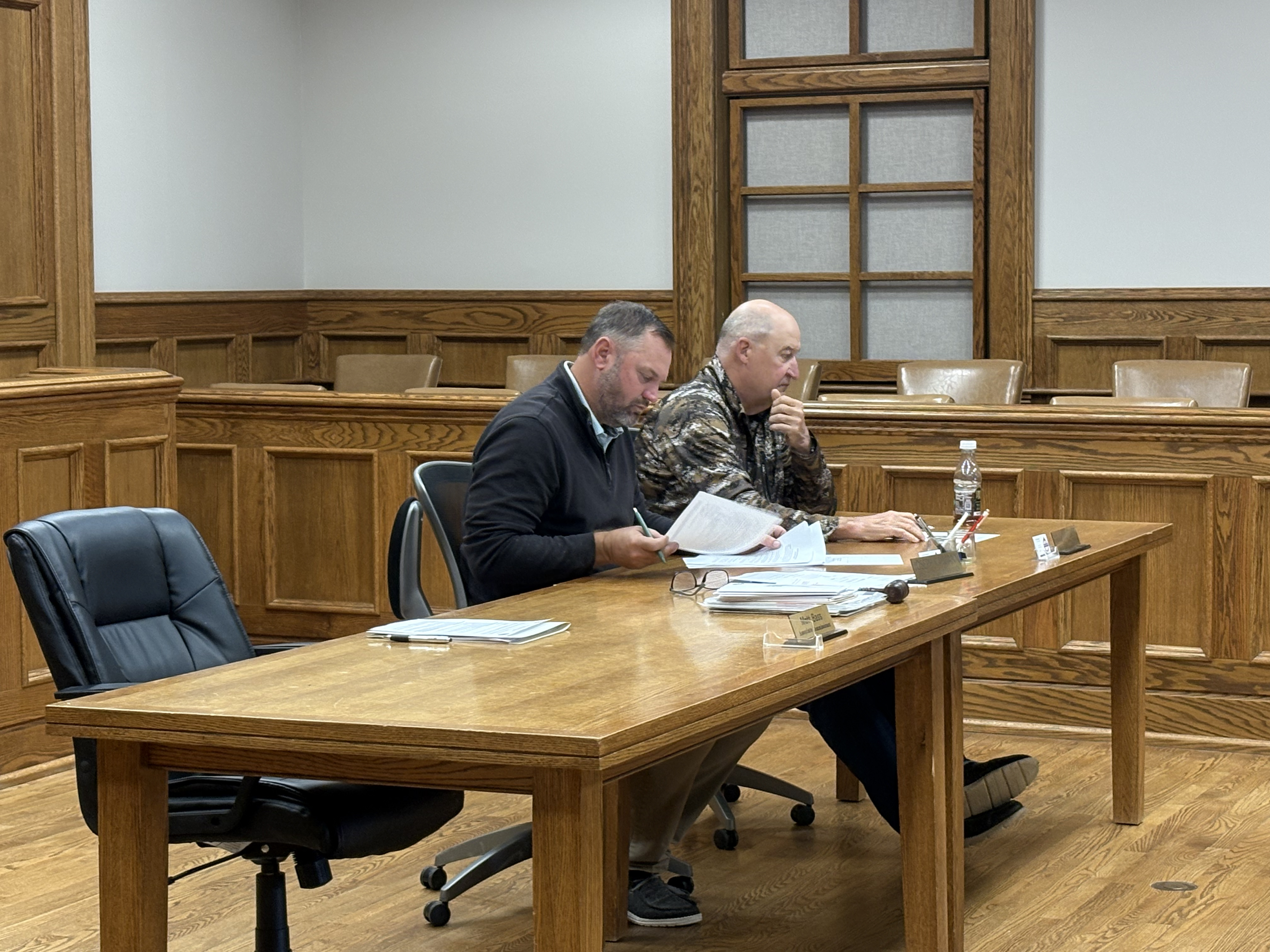
Both discussions unfolded during Thursday’s Lincoln County Commission meeting, where Presiding Commissioner Joe Kaimann and Associate Commissioner Mike Mueller were present, Associate Commissioner Matt Bass was absent. The November 12 session also brought approval for additional work on a county water project, updates from 4-H and MU Extension, and an announcement about how certain tax overpayments will be handled.
The battery storage discussion returned to a question residents have raised repeatedly: what commitments will protect the county if something goes wrong at the proposed Millcreek facility?
Samantha Capstick urged commissioners to secure clear, enforceable safeguards in the county’s agreement with Ameren. She cited other environmental disputes involving the company as reasons to examine the language closely and establish responsibilities before the facility begins operating.
Joe Gray, a Pike County resident who identified himself as a mechanical engineer, pushed for baseline soil and water testing. His argument was straightforward: collecting samples before the project begins would establish a record that could be used for comparison if concerns arise later.
Gray also apologized for his tone during Tuesday’s meeting before returning to his requests for testing, transparency and emergency preparation.
Commissioners questioned what baseline testing could establish years down the road, particularly if groundwater movement complicated efforts to identify the source of a future problem.
Gray acknowledged that groundwater and environmental analysis were outside his engineering specialty. He maintained that testing would provide a starting point. Capstick suggested continued sampling could help build a record over time.
The exchange reflected a broader disagreement over what the county could accomplish through its proposed agreement with Ameren.
Commissioners described the agreement as a way to put company commitments in writing. They emphasized that the project had received state approval and that neither side needed the county agreement for construction to move forward.
Residents wanted commissioners to use that opportunity to obtain stronger protections. They questioned whether the proposed language was specific enough and urged the county to continue pressing for answers.
Another speaker, Kathy Myers, asked commissioners to take more time to research the project and its potential consequences before signing.
No vote was taken Thursday on the Ameren agreement.

Emergency Management Director Quentin Laws explained why some emergency planning details may depend on the facility’s final engineering.
The placement and elevation of individual battery units can affect modeling for airborne releases and runoff. Changes to the layout can change the information needed to prepare for an emergency. Laws said he believed that could explain why some requested analysis remained tied to completion of the design.
He also raised a concern about walking away from the agreement: it could mean losing an opportunity to obtain equipment and other support for local responders.
The state’s approval had not required Ameren to purchase that equipment, Laws said. The county agreement offered a way to keep those needs part of the discussion.
Residents continued to press for clearer obligations, while commissioners weighed whether the proposed agreement would leave the county better protected than having no agreement at all.
In a separate matter, commissioners approved a contract amendment connected to the county’s water project.
A Cochran Engineering representative said final water test results were still pending, including testing for radionuclides. If those results are acceptable, the next phase would include three additional test wells and further water testing.
No new results were presented Thursday. The discussion focused on preparing for the next stage, including coordinating access and identifying where clearing might be needed.
The meeting then turned to programs serving local families and young people.
A 4-H presentation highlighted enrollment, youth leadership and recent club activities. About 350 members had been approved at the time of the meeting, with enrollment continuing ahead of the November 15 deadline and a goal of reaching approximately 600.
Recent activities included a project showcase, National 4-H Week window displays, a wiffle ball tournament and a recognition night attended by about 180 people.
MU Extension’s Elizabeth Anderson discussed recruiting candidates from across the county for the Extension Council’s January election. The organization was preparing its ballot and election notice and seeking residents interested in serving.
Anderson also asked commissioners to consider which issues they would like Extension to help address in 2027.
Her proposed budget included a modest increase tied to operating costs such as utilities, postage and insurance. Commissioners did not approve the request during Thursday’s meeting.
Collector Jessica Zumwalt followed with an update on the current tax season and plans for changes beyond it.
Tax bills were already available online, and some residents had begun paying, she said. Her office was working toward mailing paper bills the following day after completing corrections associated with a software conversion.
Additional office hours were also under consideration. Zumwalt discussed late evening hours and a possible Saturday opening, with a final schedule still to be determined.

The larger change would give residents a way to spread out payments toward a future tax bill.
Zumwalt outlined a planned January 1 start for advance payments, including a quarterly option. Instead of setting aside the entire amount themselves and paying it at once, participating taxpayers could make smaller payments that the collector’s office would track and credit to their accounts.
Quarterly participants would sign an agreement and receive four payment slips. The final bill would reflect payments already made, changes to taxable property and any balance remaining.
Residents could also make other advance payments in smaller amounts. Zumwalt described a system capable of tracking those payments without relying on handwritten records.
The proposal concerned paying ahead toward future taxes. It was not presented as an extension of the deadline for bills already due.
Zumwalt also announced a change in how certain adjustments would be handled after a taxpayer has paid.
Using the example of a vehicle a taxpayer no longer owned, she said an adjustment would be credited toward the following year’s bill rather than returned through a refund check.
Collected taxes are distributed to the taxing entities throughout the year, she explained, which can complicate returning money after those distributions have occurred.
Her office was also targeting February for a separate payment processing transition, with the hope of reducing transaction costs. Those potential savings were still being worked through.
The payment program remained in preparation Thursday, but its purpose was clear: give residents more flexibility before the next annual bill arrives.
About Lincoln CountyWatch
Lincoln CountyWatch is part of the County Watch Network (CWN), an independent local news organization providing fact-based coverage of Lincoln County and the surrounding region. Our reporting includes breaking news, public safety, local government, courts, business, community events, weather, and investigative journalism.
Our newsroom is not affiliated with any law enforcement agency, fire department, EMS agency, government entity, court system, political organization, or elected official. Editorial decisions are made independently and are based on available facts, public records, court records, official documents, interviews, photographs, video evidence, on-the-record statements, and other verified sources available at the time of publication. Articles may be updated or corrected as additional verified information becomes available.
Individuals mentioned in our reporting are presumed innocent unless and until proven guilty in a court of law. The filing or non-filing of criminal charges, an arrest, or the existence of an investigation should not be interpreted as evidence of guilt.
For corrections, clarifications, news tips, event submissions, or story ideas, contact tips@lincolncountywatch.com
Sources
Lincoln CountyWatch’s recording of the November 12, 2026, Lincoln County Commission meeting.
Lincoln County Commission’s posted agenda for November 12, 2026.


Comments