
Use Tax, Immigration Enforcement, And Road Costs Take Center Stage In Troy

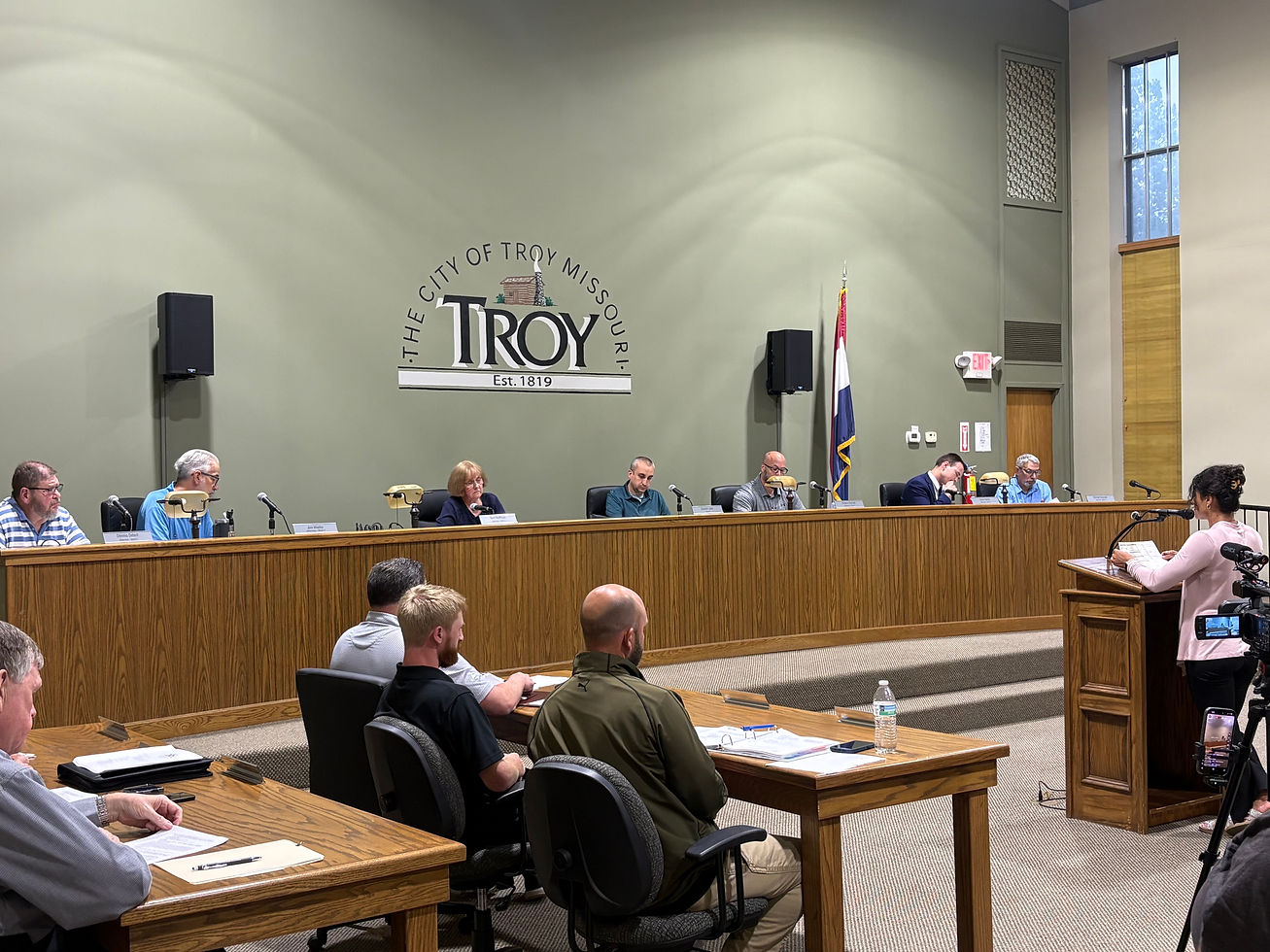
Troy, Mo. — Monday night’s Troy Board of Aldermen meeting covered everything from online sales taxes and immigration enforcement partnerships to road costs, political signs, fireworks permits, and even a temporary exception for a “good boy” dog.
All aldermen were present during the meeting, including Aldermen Detert, Wallis, Huffman, Gebhart, Martin, and Quezada, along with Mayor Quentin Laws.
Mayor Quentin Laws during May board of alderman meeting. May 18 2026 Conor Martin during May board of alderman meeting. May 18 2026 Terri Huffman during May board of alderman meeting. May 18 2026 Preston Gebhart during May board of alderman meeting. May 18 2026 Dennis Detert during May board of alderman meeting. May 18 2026 Michael Quezada during May board of alderman meeting. May 18 2026
One of the largest discussions of the night centered around bringing Troy’s proposed use tax back to voters after a similar proposal failed by more than 70% during the April election.
The use tax would apply to qualifying online purchases and allow the city to collect local sales taxes already being paid on those purchases rather than the money going elsewhere.
Alderman Detert questioned whether now was the right time to revisit the proposal, pointing to the estimated $16,000 cost to place the issue back on the ballot while many residents continue living paycheck to paycheck.
Alderman Gebhart said he believed the previous proposal failed largely because residents did not fully understand what the tax actually was.
Alderman Huffman emphasized the proposal would not create a new tax, but instead allow Troy to collect money already being generated through online purchases within city limits.
Alderman Wallis agreed the city likely needs the revenue but acknowledged concern after the proposal failed by roughly 71% in April.
“It needs education,” Wallis said, later questioning who realistically has the time to go door-to-door and properly explain the issue to residents before another election.
City Administrator James Knowles said Troy’s average homeowner pays roughly $50 to $70 annually in city property taxes and argued that amount alone does not fund streets, parks, the pool, or police services.
“Sales tax does,” Knowles said, later calling online purchases one of the largest pools of revenue currently being generated inside Troy city limits without being fully collected locally.
Knowles also warned the city would likely need significant property tax increases to generate the same level of funding the use tax could potentially bring in.

Revenue projections discussed during the meeting estimated the proposal could generate roughly $500,000 annually for the city.
Wallis later warned future cuts equivalent to nearly one-third of the police department could eventually become reality without additional revenue growth.
Detert and Martin ultimately voted against moving the proposal forward.
Another lengthy discussion focused on a proposed 287(g) immigration enforcement partnership involving cooperation with federal authorities.
The discussion was introduced by Alderman Martin, who argued the partnership would help local police work more effectively with federal agencies after someone is already suspected or arrested for committing a crime.
Interim Police Chief Ronkoski explained Troy officers currently cannot directly enforce federal immigration law and do not have the same access to federal systems officers use at the local and state level.
Alderman Wallis raised concerns surrounding public perception of ICE and immigration enforcement nationally, saying he believes community policing remains important and questioning whether additional training requirements could impact staffing.
When given an opportunity to respond, Ronkoski stated the agreement would not create the type of aggressive immigration enforcement operations many residents associate with television coverage.
Martin later argued the training tied to the program could actually benefit officers and referenced nationally publicized incidents where lack of training became a concern.
Detert also voiced hesitation during the discussion.
“I’m very uneasy that it has that word in it,” Detert said while referring to ICE.
Detert later clarified he did not want residents believing Troy police officers would suddenly begin conducting door-to-door immigration operations, describing the proposal as something that would only come into play after arrests had already occurred and “nothing at all that resembles TV.”
The board ultimately voted to table the discussion until the next meeting for additional review.
The board also unanimously approved a request from a longtime fireworks vendor who has operated in Troy for approximately seven years and is now relocating to a different site within the city.
A separate ordinance involving political campaign signs also passed unanimously after Alderman Martin proposed modifying the removal deadline for candidates.
Originally, candidates would have been required to remove signs by the close of Election Day. Martin argued candidates working full-time jobs may not realistically be able to remove signs immediately after polls close.
The amendment extended the deadline until midnight following Election Day.
Road projects also drew concern Monday night after aldermen learned a planned asphalt project had increased roughly $121,000 over earlier estimates.
Alderman Huffman questioned why costs increased so significantly and also asked why portions of the project appeared to stop short of originally expected areas.

One of the lighter moments of the evening came during public comments when resident Michelle Sanders approached the board requesting a temporary exception to the city’s two-dog ordinance.
Sanders explained family members would temporarily be staying with her, bringing a third dog into the home. She told the board the dogs are supervised regularly, remain inside a fenced yard, and are not allowed to bark excessively.
Alderman Gebhart jokingly asked whether the dog was “a good boy,” drawing laughter inside chambers.
Sanders confirmed he was.
Alderman Wallis thanked Sanders for coming forward honestly regarding the issue, noting many residents likely would not have addressed it publicly.
Detert also encouraged residents to register pets with the city, noting registration costs only $1 and helps reunite lost animals with owners more quickly to keep “the little dogs not away from home too long.”
The request was approved unanimously.
Watch the full Troy Board of Aldermen meeting here: https://youtu.be/-hQv_s-JPiQ
Story by John Eads
Sources:
• City of Troy Board of Aldermen meeting
• Agenda documents and public discussion observed by Lincoln CountyWatch


Comments